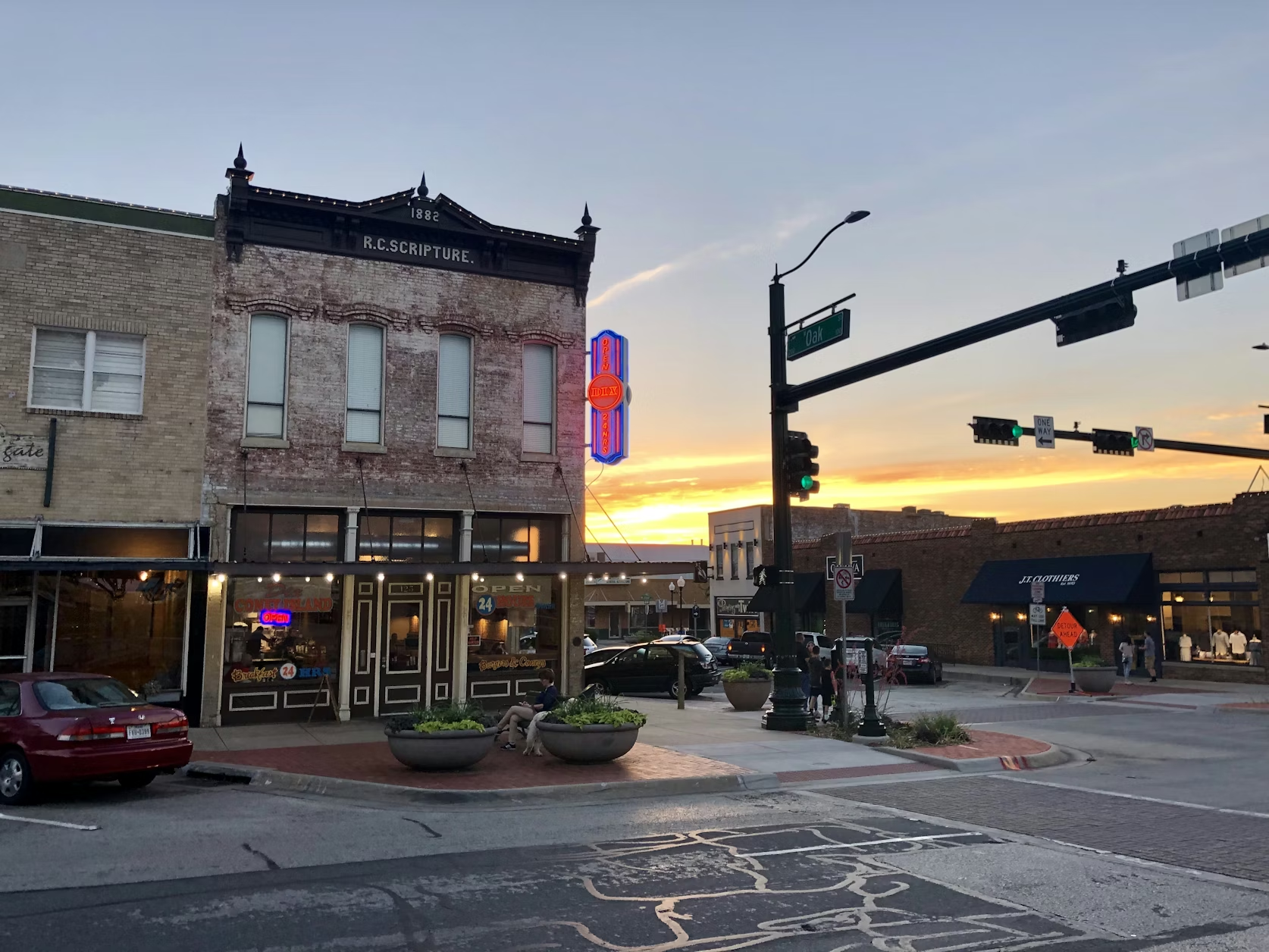
Garden City sits between Westland, Livonia, and Inkster, on the western edge of Wayne County. It's about five and a half square miles — smaller than most of the towns I work in — and it's easy to drive past Ford Road without registering what's actually there. I wanted to take a closer look at what the city has chosen to fund and build, because for a community its size, the list is unusual.
None of what follows is a real estate pitch. It's just a record of a few specialties Garden City has — the kind of thing that takes years of civic decisions to put in place.
1. The Burger Program
The thing that stood out to me first is something a lot of people outside the area haven't heard of. Garden City Public Schools operates the Burger Program, a center-based school for autistic students. It serves students from across western Wayne County, not just Garden City residents, and it has two campuses: Burger Baylor, which serves first through twelfth grade, and the Burger Transition Center, which serves post-secondary students working on independence and employment skills.
The district also runs a dedicated Autism Support team that works with families and teachers across its schools. It's a regional resource — the kind of program that smaller districts often can't sustain on their own.
2. Music in the Park, summers
From there, the rhythm of the city shifts with the season. In the warmer months, City Park hosts a Music in the Park series with live music, food trucks, and local vendors on a recurring schedule through the summer. It's a smaller, neighborhood-scale version of what you'll find downtown in Plymouth or Northville — not a destination event, just a regular reason to be outside in the city.
The crowd skews local — families, longtime residents, neighbors who walked over from their block — and admission is free. It's the kind of programming that does a quiet but real thing for a community: it gives people a reason to gather in the same place, on a predictable schedule, for a few months out of the year. By the end of the summer, you start seeing the same faces from one week to the next.
3. Garden City Park and the Civic Ice Arena
The park itself — where the music series happens — is the city's main green space. Garden City Park sits at the corner of Cherry Hill and Merriman, fifty-six acres laid out around a 1.2-mile walking path, two age-tiered playgrounds, and several pavilions available for resident rental. The trees are mature, the paths are kept up, and on a weekday morning it's mostly walkers, dog owners, and parents pushing strollers.
Inside the park is the Civic Ice Arena, which keeps year-round skating in the city. The arena runs the usual mix of public open-skate sessions, hockey, and learn-to-skate programming through the season — the kind of recreation infrastructure that's easy to take for granted until you live somewhere that doesn't have it. The full parks system runs to nine properties and roughly eighty-four acres total — not the largest in the area, but well-kept and consistently programmed.
4. The library at Maplewood
Indoors, the Garden City Public Library sits at the Maplewood Community Center on Maplewood Street, just west of Merriman. The Maplewood building is a multi-use civic space — library access alongside other community programming under one roof. It's a pattern Garden City uses repeatedly: pick a building, layer the services, give residents one address to remember.
5. The Radcliff Center
The clearest example of that pattern is the Radcliff Center. Where most cities I work in spread civic services across several buildings, Garden City has consolidated a lot of them into one. Radcliff houses the Parks & Recreation office, the Senior Center, a Family Resource Center, a fitness center, and community support services including a food pantry, tax assistance, and veteran services.
The practical effect is that a resident who needs more than one of those things doesn't have to drive across town to get it. That kind of co-location is unusual at this scale.
For a city that's five and a half square miles, the list of things you can do at one address is long.
6. Senior services
The clearest beneficiary of all that consolidation is the senior population. The Senior Center at Radcliff offers free exercise classes Monday, Wednesday, and Friday mornings, open to any Garden City resident sixty or older. There's a regular bingo schedule, the M&M men's and women's social group, a Chess4Community lesson program, and seasonal community meals.
On the food assistance side, two separate programs run out of the same building: the Emergency Food Assistance Program (TEFAP), which distributes on the third Wednesday of the month, and Focus: HOPE, which serves residents sixty and older across Wayne, Oakland, Macomb, and Washtenaw counties on the first Wednesday. Two food programs in one community building is more than I see in most places this size.
The short version
What stands out about Garden City, when you add these up, isn't any single thing. It's the choice the community has made over years to keep funding and consolidating services that smaller cities sometimes let go. The Burger Program is the headline; the Radcliff Center is the through-line.
If you live in the area, or you're driving through on Ford Road, it's worth knowing what's actually being built and maintained behind those storefronts.